 Qrave
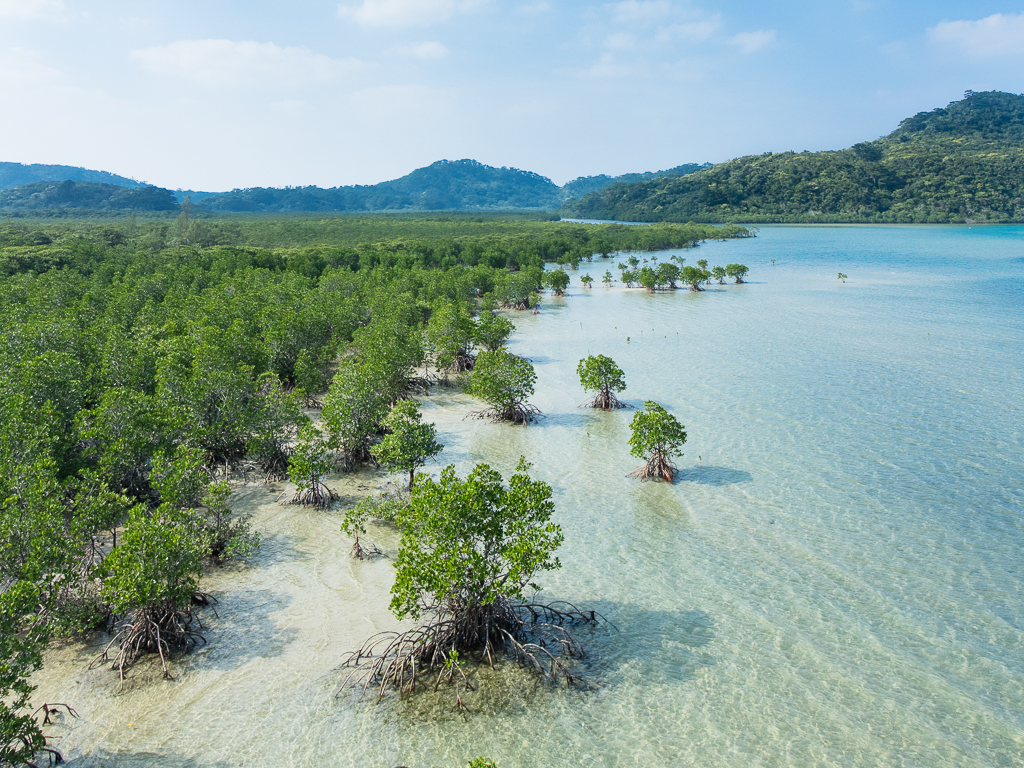
QraveAmami-Oshima Island, Tokunoshima Island, Northern part of Okinawa Island, and Iriomote Island
| Country |  Japan Japan |
|---|---|
| Year inscribed | 2021 |
| Criteria | (x) |
Overview
Encompassing 42,698 hectares of subtropical rainforests on four islands on a chain located in the southwest of Japan, the serial site forms an arc on the boundary of the East China Sea and Philippine Sea whose highest point, Mount Yuwandake on Amami-Oshima Island, rises 694 metres above sea level. Entirely uninhabited by humans, the site has high biodiversity value with a very high percentage of endemic species, many of them globally threatened. The site is home to endemic plants, mammals, birds, reptiles, amphibians, inland water fish and decapod crustaceans, including, for example, the endangered Amami Rabbit (Pentalagus furnessi) and the endangered Ryukyu Long-haired Rat (Diplothrix legata) that represent ancient lineages and have no living relatives anywhere in the world. Five mammal species, three bird species, and three amphibian species in the property have been identified globally as Evolutionarily Distinct and Globally Endangered (EDGE) species. There are also a number of different endemic species confined to each respective island that are not found elsewhere in the property.
Track the World Heritage Sites you visit
Qrave is a travel log app that lets you check in to countries and UNESCO World Heritage Sites and fill in your own world map.


Source: UNESCO World Heritage List — CC BY-SA 4.0