 Qrave
QraveEarly Christian Monuments of Ravenna
| Country |  Italy Italy |
|---|---|
| Year inscribed | 1996 |
| Criteria | (i) (ii) (iii) (iv) |
Overview
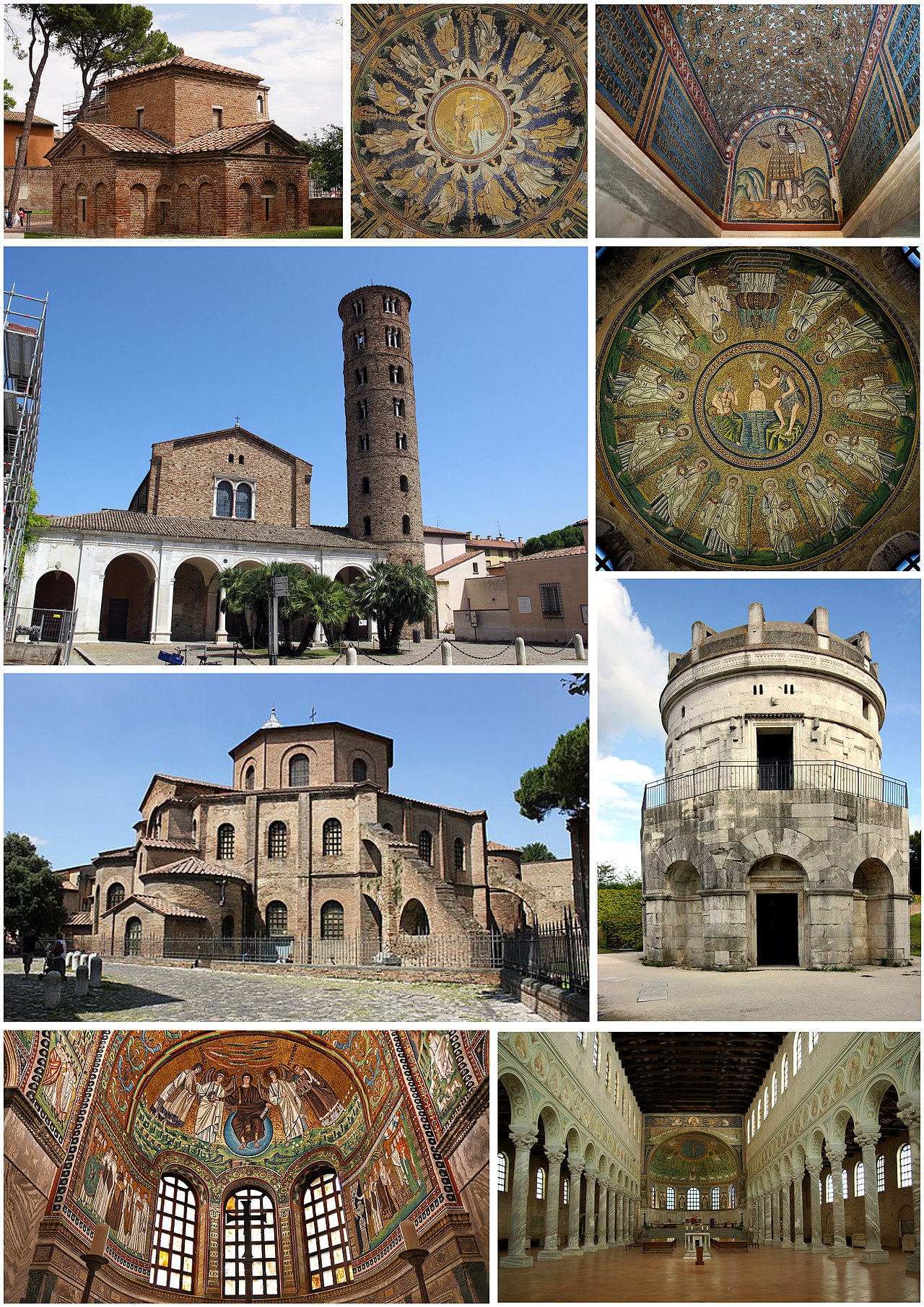
Ravenna was the seat of the Roman Empire in the 5th century and then of Byzantine Italy until the 8th century. It has a unique collection of early Christian mosaics and monuments. All eight buildings – the Mausoleum of Galla Placidia, the Neonian Baptistery, the Basilica of Sant'Apollinare Nuovo, the Arian Baptistery, the Archiepiscopal Chapel, the Mausoleum of Theodoric, the Church of San Vitale and the Basilica of Sant'Apollinare in Classe – were constructed in the 5th and 6th centuries. They show great artistic skill, including a wonderful blend of Graeco-Roman tradition, Christian iconography and oriental and Western styles.
Track the World Heritage Sites you visit
Qrave is a travel log app that lets you check in to countries and UNESCO World Heritage Sites and fill in your own world map.


Source: UNESCO World Heritage List — CC BY-SA 4.0